
October 4, 2026
Concrete Driveway Repair vs. Replacement in Jacksonville
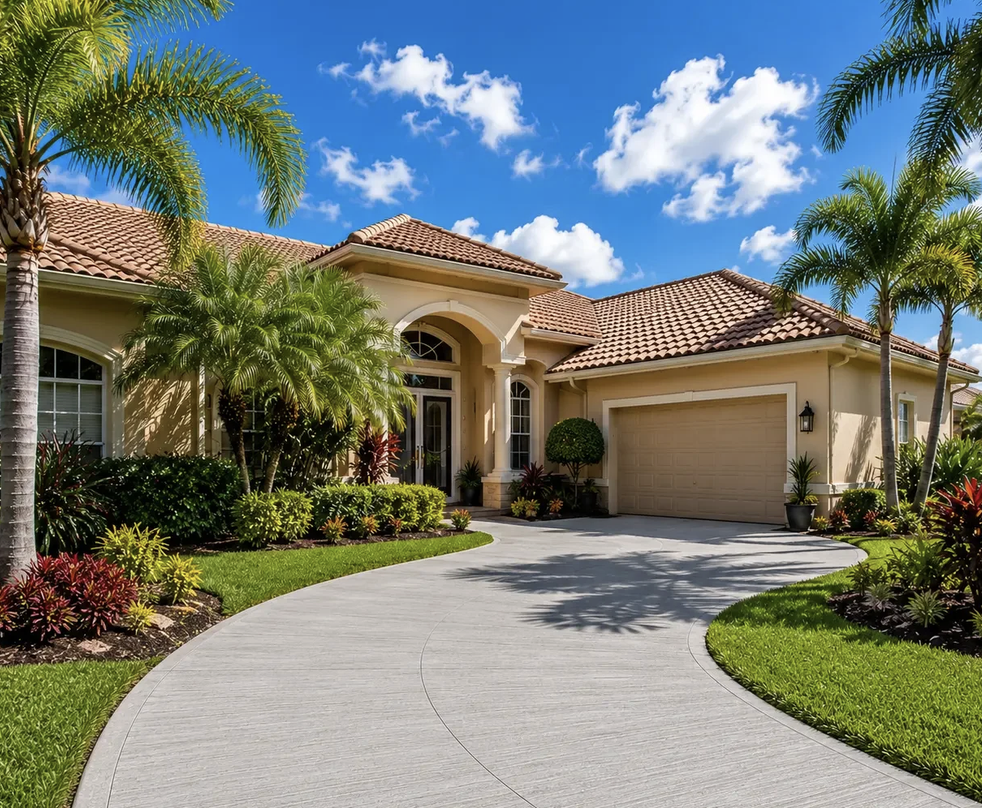
A cracked or sunken driveway raises an expensive question: can it be fixed, or does it need to come out? There's no single answer, but there is a sensible way to think about it. The key is figuring out whether the problem is on the surface or underneath.
This guide explains the signs that point toward repair, the ones that usually point toward replacement, and how to compare estimates that recommend different approaches.
Quick comparison
| Condition | Repair may work | Replacement may be better |
|---|---|---|
| Minor surface cracks | Yes | Usually unnecessary |
| Wide or growing cracks | Sometimes, if the base is stable | If cracks keep returning |
| One or two sunken sections | Often — leveling or section replacement | If settling is widespread |
| Significant settlement | Depends | Often worth evaluating |
| Spalling or flaking surface | Often — patching or resurfacing | If deterioration is deep |
| Water pooling against the garage | Sometimes, with regrading | If the slab slope is wrong overall |
| Severe base failure | Rarely sufficient | Often appropriate |
General guidance only. An on-site look at the slab, base and drainage is the only reliable way to decide.
When a driveway can usually be repaired
Hairline shrinkage cracks, a cracked corner, a single settled panel near the street or surface scaling on otherwise solid concrete are usually repair territory. If the slab is mostly flat, drains properly and the cracks aren't widening, you're generally looking at crack filling, joint work, patching, leveling a section or replacing one panel.
When replacement is more appropriate
Replacement starts to make sense when problems are spread across the slab rather than isolated: many intersecting cracks, panels that rock or move vertically, widespread sinking, or a driveway that was poured too thin for the vehicles using it. Repairs on a failing base tend to come back, and repeated repairs can cost more than doing it once properly.
Minor cracks vs. serious structural damage
All concrete cracks — control joints exist to guide those cracks. Cracks that stay narrow and level on both sides are mostly cosmetic. Cracks where one side has dropped below the other, cracks that widen each season, or patterns that look like a spider web suggest the support underneath has changed.
Settling, uneven sections and signs of subgrade failure
- Panels that tilt toward the garage or house.
- Gaps opening at slab edges where sand has washed out.
- Voids you can feel by tapping — a hollow sound.
- Edges that crumble or break off along the lawn.
- Sections that move when a vehicle drives over them.
Jacksonville's sandy subgrade can erode when runoff is concentrated at a slab edge, and tree roots can lift panels from below. Both are common reasons older driveways in neighborhoods like Arlington, San Marco and Riverside start to fail.
Surface deterioration: patch or resurface?
Patching works for localized spalls and chips. Resurfacing works when the whole surface is worn but the slab underneath is sound and stable. Neither fixes movement or base failure — an overlay on a moving slab will crack along with it.
Drainage problems
If water pools against the garage or runs off one edge and washes out sand, the cause needs addressing whether you repair or replace. Sometimes that's a downspout extension; sometimes the slab slope itself is wrong, which only replacement can fully correct.
Older driveways
Age alone isn't a reason to replace. A well-built older driveway can stay serviceable for a long time. But older slabs were sometimes poured thinner or over less carefully prepared base, and if they're showing several of the warning signs above, replacement is usually worth pricing.
Cost comparison factors
Repairs cost less up front, but compare them against how long the fix is likely to last. Replacement includes demolition and haul-off (our calculator plans about $2–$4.50 per square foot for that) on top of new concrete. For a 600 sq ft broom-finish driveway, our calculator's replacement planning range is $6,200 – $11,650 — an estimate, not a quote.
How to evaluate different estimates
- Ask each contractor what they believe caused the damage — a good diagnosis matters more than the price.
- Check whether a repair bid addresses the cause or only the symptom.
- Compare thickness, base preparation, reinforcement and joint layout on replacement bids.
- Make sure demolition, haul-off and apron work are included or clearly excluded.
Florida heat, rain and sandy soil
Heat speeds up drying and can cause surface shrinkage if fresh repairs aren't cured properly. Heavy summer rain finds every gap and washes out sand. That's why repairs here should seal joints and edges, and why replacements should start with a compacted base and correct slope.
Common homeowner mistakes
- Caulking over a crack that's actively moving.
- Resurfacing a slab that is still settling.
- Ignoring a downspout dumping water at the slab edge.
- Waiting until a trip hazard becomes a broken panel.
Not sure which way to go? We'll look at the slab, the base and the drainage and tell you plainly.
Please have your 5-digit ZIP code ready.
Related pages
- Concrete driveway repair
- Concrete driveway replacement
- Concrete resurfacing
- Why driveways crack in Florida
- Concrete cost calculator