
August 22, 2026
Why Concrete Driveways Crack in Florida—and What Jacksonville Homeowners Can Do
All concrete cracks. The question is whether it cracked where it was supposed to. In Northeast Florida the causes are different from the ones you read about in northern climates — we don't have freeze-thaw. We have sand, water and heat.
Shrinkage cracking
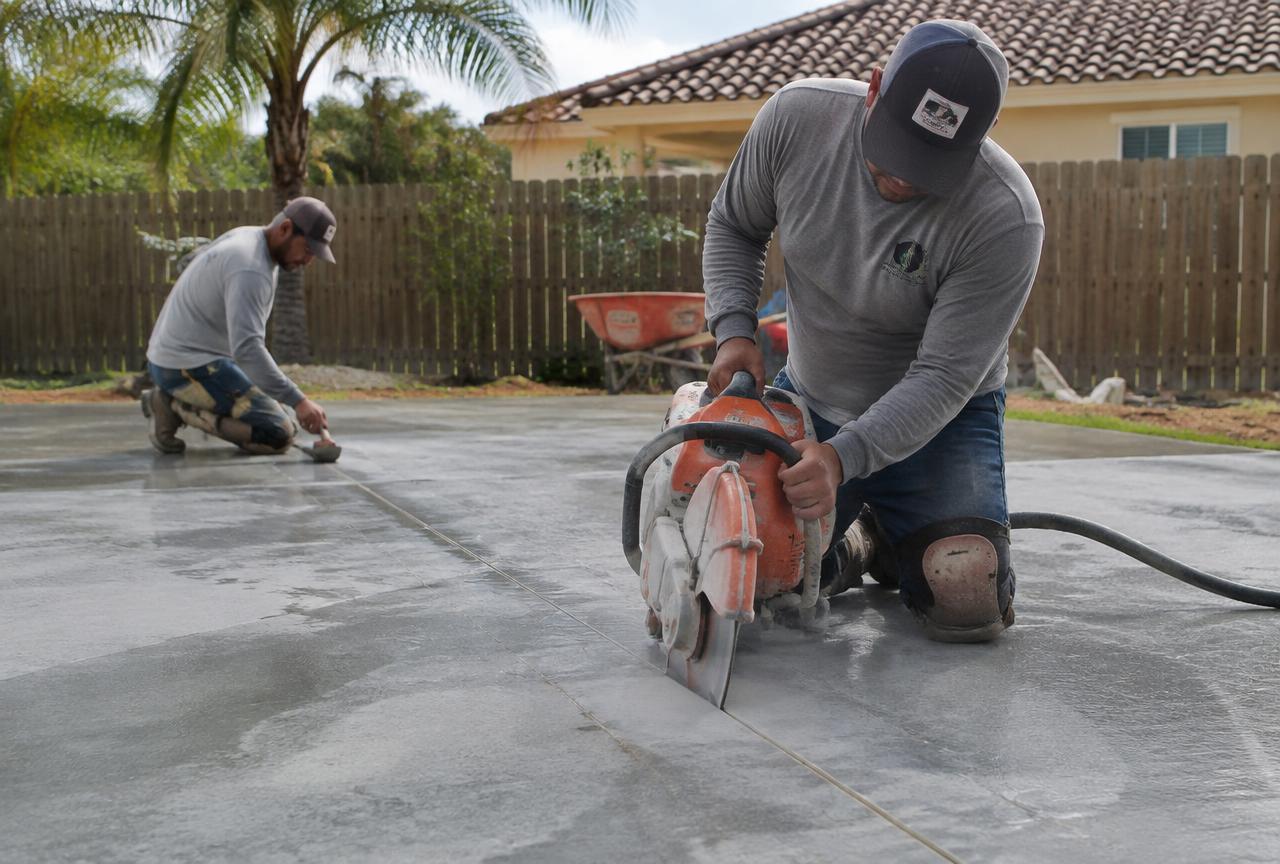
Concrete shrinks slightly as it cures, and that tension has to go somewhere. Control joints are cut so the shrinkage crack forms inside the joint, hidden. When joints are spaced too far apart, or cut too shallow or too late, the slab picks its own line across the middle of a panel instead.
Base settlement
The most common serious cause here. Sandy subgrade that wasn't compacted, or that later washed out, leaves the slab unsupported. The telltale sign is a crack where one side sits lower than the other. Filling that crack does nothing — the slab needs support restored.
Drainage and washout
Water from a downspout, an irrigation leak or a poorly graded yard moves fine material out from under the edge of a slab. Over a few rainy seasons, that void becomes a crack. This is why we treat drainage as part of a concrete job rather than someone else's problem.
Tree roots
Jacksonville's live oaks are magnificent and hard on concrete. Roots run shallow and lift panels from below. Replacement without rethinking the route and joint layout produces the same lift again in a few years.
Overloading
A slab poured for passenger cars, then parked on by an RV, a loaded trailer or a delivery truck, will crack. It's not a defect — it's a mismatch between the design and the actual use. Tell your contractor what will really park there.
Heat during placement
Pouring in July heat means concrete sets faster and the surface can dry before the body of the slab does. Timing, finishing technique and curing practice all change with the forecast. A crew that pours the same way in February and August will have problems in August.
Reading your own cracks
- Hairline, inside or near a joint: normal, cosmetic. Seal it if you like.
- Thin and stable across a panel: usually cosmetic; worth monitoring.
- Sides at different heights: settlement. Needs base work or leveling.
- Wide, branching, multiple panels: the slab or base has failed; replacement is usually the honest answer.
- Crumbling edges along the crack: deterioration, not just cracking.
What you can do
Keep water away from slab edges, clear and reseal joints periodically, don't park heavy vehicles on a slab that wasn't built for them, and address settlement early — a section that's dropped half an inch is much cheaper to deal with than one that's dropped two.
Not sure which kind you have? We assess driveway cracks for free — call 904-650-7337.