
Residential Concrete • Jacksonville, FL
Stamped Concrete in Jacksonville, FL
Stone, slate and plank patterns with integral or release color, finished with a sealer chosen for Florida sun and wet feet.
Please have your 5-digit ZIP code ready.
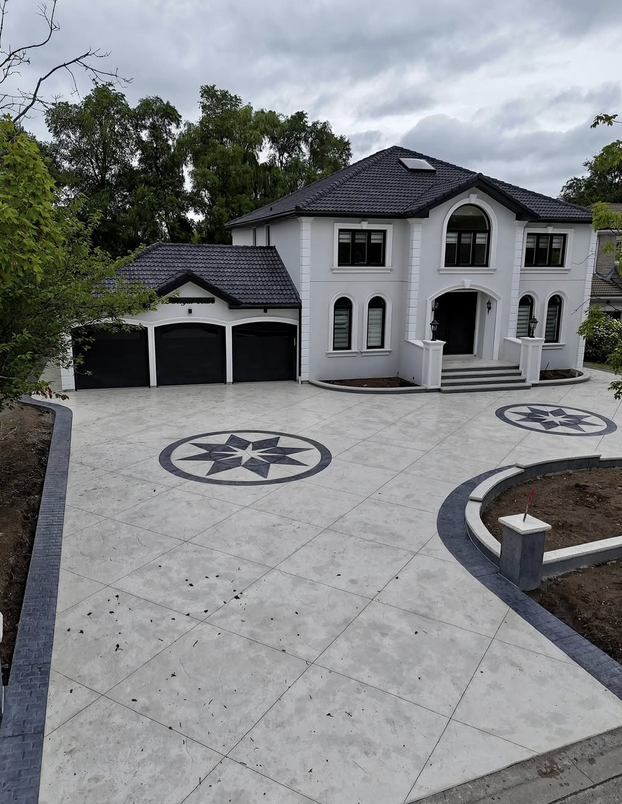
Pattern, color and border
Stamped concrete gets the look of stone, slate, brick or wood plank at a fraction of the installed cost of the real material, in one continuous slab with no individual pavers to shift or sprout weeds.
Three choices set the result: the stamp pattern, the base color, and the accent or release color that settles into the texture. A contrasting border or saw-cut band frames the area and makes a large driveway read as designed rather than vast.
Heat and traction in Florida
Dark stamped surfaces get hot in direct Jacksonville sun. Around pools and on barefoot areas we steer toward lighter colors, which stay noticeably cooler.
Traction comes from texture and the right sealer, not from the pattern. We use sealers appropriate to where the surface is — a pool deck and a driveway don't get the same product.
Where stamped concrete works
Driveways, entries, walkways, patios and pool decks are all good candidates. It also works well for driveway aprons and borders when you want an accent without stamping the whole drive.
Maintenance you should plan on
Stamped concrete needs resealing periodically to hold color and resist staining — how often depends on sun exposure and traffic. It's a real maintenance item and we'd rather you hear it now than be surprised in three years.
How stamped concrete is installed
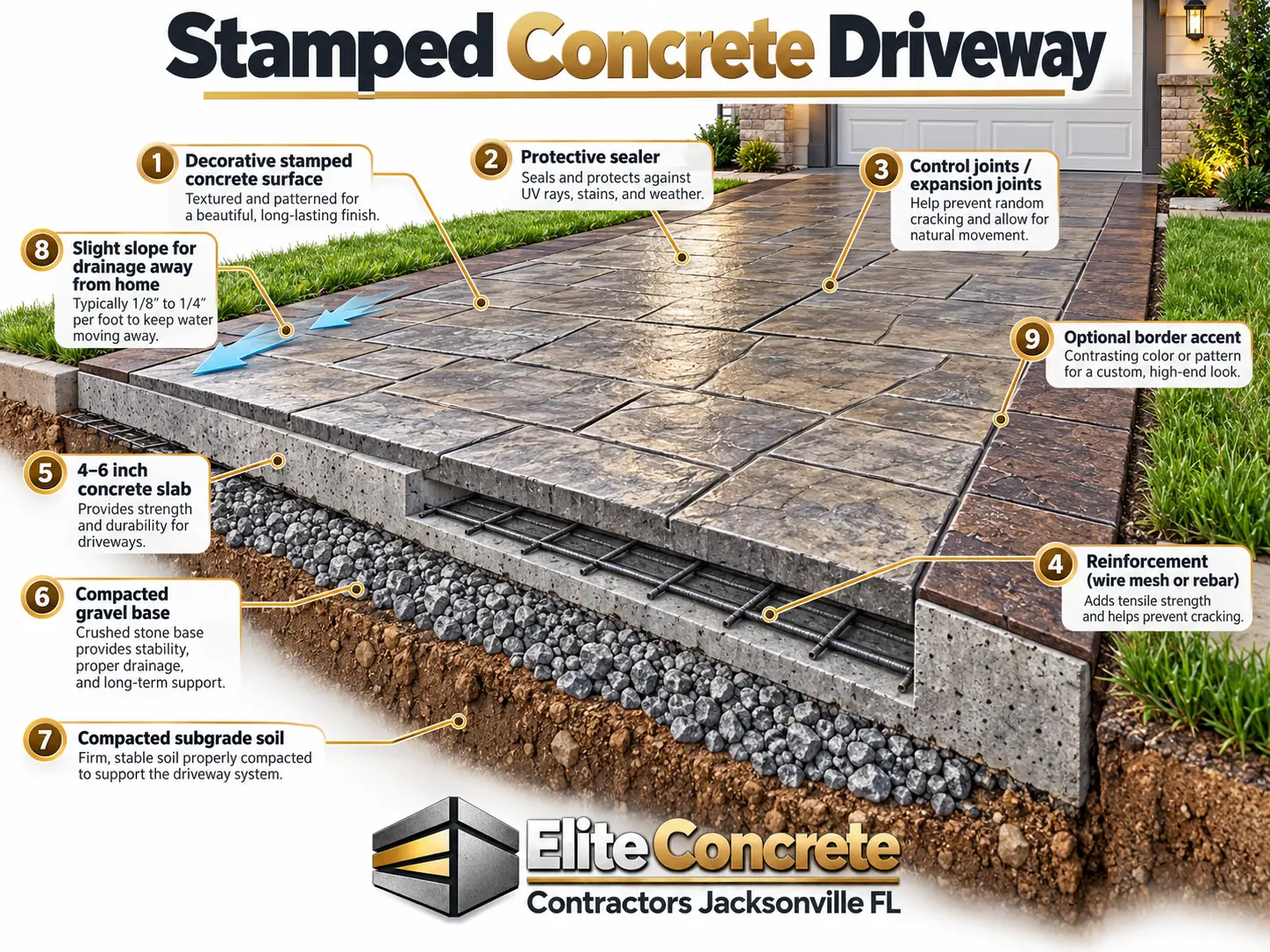
Stamped concrete starts as a normal slab, so everything that makes a driveway or patio last still applies: compacted subgrade, proper thickness, reinforcement and a drainage plan. The decorative work happens in a short window while the concrete is still workable, which is why crew size and timing matter more on stamped jobs than on plain broom finish.
The cutaway below shows how the pattern sits on top of a structural slab — the texture is only the last fraction of an inch.
- Prepare and compact the base, set forms and reinforcement
- Pour and level the slab, adding integral color to the mix if selected
- Broadcast a color hardener on the surface if the design calls for it
- Apply a release agent, which adds the secondary accent color and keeps the stamps from sticking
- Press textured mats into the surface in sequence while the concrete is still plastic
- Detail edges and steps by hand, then cut control joints
- Wash off excess release once cured and apply a sealer
Choosing a pattern and color
Patterns fall into a few families: stone looks such as ashlar slate, random flagstone and cobblestone; wood plank; and borders or medallions used to frame a plain field. Larger, irregular stone patterns tend to hide joints and minor cracks well. Tight, regular patterns look crisp but show any imperfection more readily.
Color comes from two layers — a base color and a darker release accent that settles into the low spots. Lighter base colors stay noticeably cooler in the Florida sun, which matters for pool decks and patios you'll walk on barefoot. We'll show you samples in daylight rather than choosing off a screen.
Sealing: the part that keeps it looking new
Sealer protects the color from UV fade, helps resist oil and tannin stains from oak leaves, and brings out the depth of the pattern. In Jacksonville's sun, most stamped surfaces need resealing about every two to three years. Waiting too long lets the color wash out and the surface absorb stains.
On walkable areas and around pools we add a slip-resistant additive to the sealer. A glossy sealer without it can get slick when wet.
Repairing stamped concrete
Stamped concrete can be repaired, but it's harder to hide than plain concrete. Small hairline cracks are usually left alone or filled with a color-matched sealant. Faded or blotchy color can often be restored with cleaning, a tinted sealer or recoloring. Sections that have settled or broken badly may need to be cut out and re-poured, and we'll be honest that a perfect match on age-weathered color is difficult.
- Hairline cracks: color-matched crack filler
- Faded color: clean, re-tint and reseal
- Peeling or cloudy sealer: strip and reseal
- Settled or broken panels: remove and re-pour the section
Questions
Stamped Concrete in Jacksonville, FL FAQs
Related concrete services
Call Now for a FREE Quote & Service Availability
Call now for a free quote and service availability. 7 Days • 7AM–11PM.
Please have your 5-digit ZIP code ready.