
Residential Concrete • Jacksonville, FL
Concrete Driveway Extensions in Jacksonville, FL
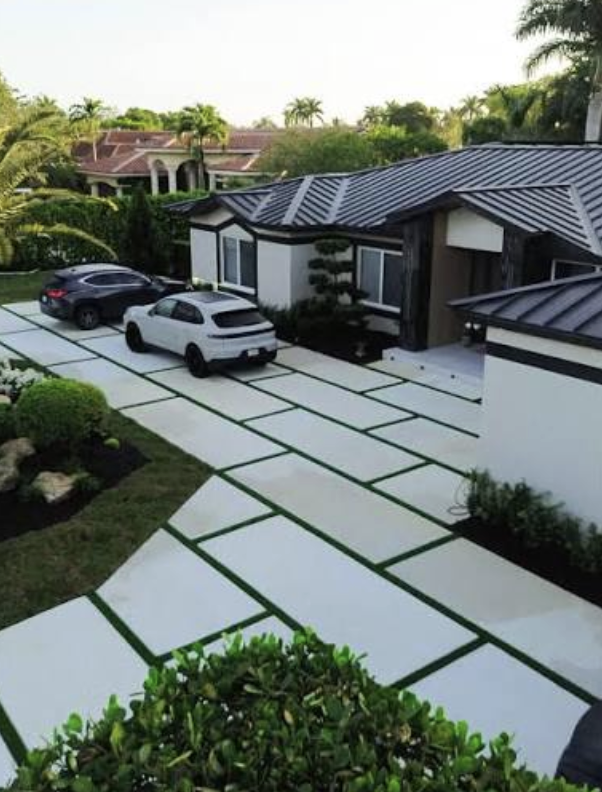
Widen your driveway, add a parking pad beside it or extend it toward the street — tied into your existing concrete so it drains right and looks like it belongs.
Please have your 5-digit ZIP code ready.
Why Jacksonville homeowners extend a driveway
Most driveways in older Jacksonville neighborhoods were sized for one or two cars. Add a teenager's car, a work truck, a boat or a golf cart and the lawn starts getting parked on. A concrete extension gives every vehicle a solid, clean place to sit and stops ruts and mud at the edge of the drive.
An extension is usually far less disruptive than a complete replacement, because the existing slab stays in place when it's in good shape.
- Extra parking for cars, trucks and household vehicles
- Easier entry and exit without stepping onto grass
- Room to open doors next to a parked car
- A pad for trash cans, a trailer or a side-yard gate
Side extensions vs. extending the length
A side extension (widening) adds a strip along one or both sides of the existing drive — the most common request, often turning a single-car width into a two-car width. Extending the length adds concrete at the garage end or toward the street, and may involve the apron and right-of-way rules. Some properties get an L-shaped pad off the side for a boat or RV.
Which makes sense depends on lot layout, setbacks, utilities, trees and where the water needs to go.
Matching your existing concrete
New concrete never matches old concrete perfectly on day one. Older slabs have weathered and picked up stains; new concrete starts lighter. We match the finish texture — broom direction, trowel borders, saw-cut joints — so the extension reads as intentional. Over time the color difference softens. For a more uniform look, some homeowners add a contrasting border or band so the transition looks designed rather than patched.
Excavation and sandy Florida subgrade preparation
The new section is dug out to the correct depth, organic soil and roots are removed, and the sandy subgrade is compacted. This is what keeps an extension from settling and pulling away from the original slab — a very common failure on extensions poured over loose fill.
Drainage and grading
Adding concrete means less ground to absorb rain. The extension must slope so runoff continues away from the garage and house and doesn't dump onto a neighbor's yard or wash out the edge of the slab. Downspouts and existing swales are part of the plan.
Tying in: reinforcement, joints and curing
Where the extension meets the existing driveway, we plan the joint deliberately — typically an isolation or construction joint, sometimes with dowels where appropriate — so the two slabs can move without cracking each other. Control joints in the new section line up with the existing pattern. After the pour, proper curing matters even more in Jacksonville heat.
Extension vs. complete replacement
If your existing driveway is cracked throughout, sinking or draining toward the house, extending it ties new concrete to a failing slab. In that case replacing the whole driveway is often the better investment. If the existing slab is solid, an extension is the efficient choice.
Permits and property lines
Many extensions are straightforward, but rules on setbacks, impervious surface, the right-of-way at the street and HOA approval vary across Jacksonville/Duval, St. Johns and Clay County and between subdivisions. Check with your city or county and your HOA before work begins — we'll talk through what we see on site, but local requirements govern.
What a driveway extension costs
Using our calculator's driveway assumptions (broom finish, wire mesh, easy access), a 10 × 20 ft side extension plans out around $1,800–$3,000, and a 12 × 40 ft widening around $4,000–$7,150. These are planning estimates, not quotes.
- Size and shape of the extension
- Removing sod, roots or old pavers
- Fill needed to bring low ground up to grade
- Tie-in work and saw-cutting the existing edge
- Finish — matching a decorative finish costs more than broom
- Access for the truck and any apron or curb work
Typical project steps
- On-site visit to measure, check drainage and look at the existing slab
- Layout and marking, including utility locates
- Excavation, sod removal and subgrade compaction
- Forms, reinforcement and the tie-in joint
- Pour, finish to match, and cut control joints
- Curing, form removal and cleanup
Jacksonville climate considerations
Summer heat speeds up setting, so pour timing and curing matter. Heavy afternoon storms test drainage right away. And sandy soil means edges need proper support so runoff doesn't undermine them — especially on wide extensions in neighborhoods like Mandarin, Southside and Fleming Island where lots slope toward retention ponds.
Questions
Concrete Driveway Extensions in Jacksonville, FL FAQs
Related concrete services
Call Now for a FREE Quote & Service Availability
Call now for a free quote and service availability. 7 Days • 7AM–11PM.
Please have your 5-digit ZIP code ready.