October 4, 2026
Concrete Resurfacing vs. Replacement: Which Is Better?
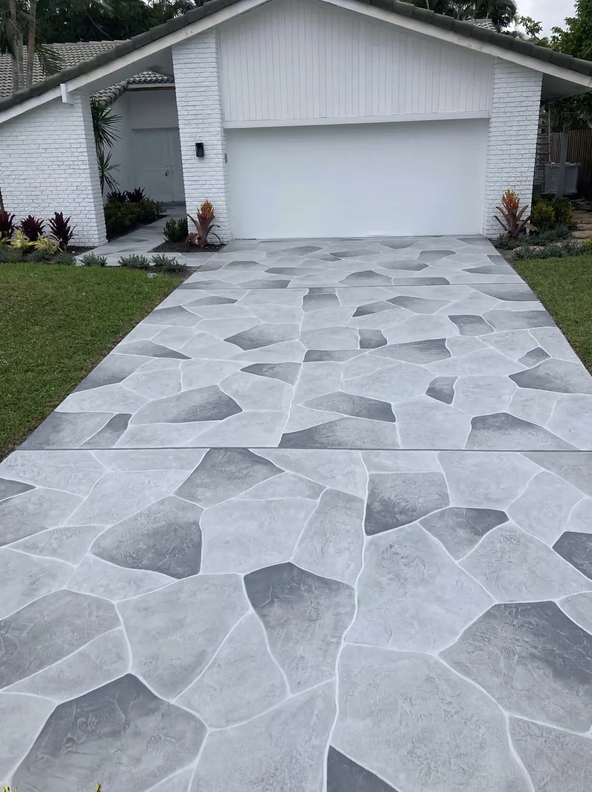
Resurfacing can make tired concrete look new for a fraction of the disruption of tearing it out. But an overlay is only as good as the slab underneath it. This guide focuses on how resurfacing actually works and how to judge whether your surface is a good candidate — on patios, pool decks, walkways and driveways alike.
What concrete resurfacing involves
Resurfacing bonds a thin cement-based layer — a micro-topping, skim coat or stamped/textured overlay — to the existing slab. The new layer can be colored, textured, troweled smooth or patterned. It changes the surface, not the structure.
Side-by-side comparison
| Resurfacing | Replacement | |
|---|---|---|
| Best for | Cosmetic wear on a sound, stable slab | Structural damage, settling, wrong slope |
| Fixes movement? | No | Yes, with new base prep |
| Fixes drainage? | Only minor surface issues | Yes — slope can be reset |
| Disruption | Lower — no demolition | Higher — tear-out and haul-off |
| Relative cost | Generally lower | Generally higher |
| Finish options | Color, texture, stamped overlay | Any finish |
When resurfacing is appropriate
- Surface scaling, flaking or worn texture.
- Stains and discoloration you can't clean out.
- Hairline cracks that aren't moving.
- A dated finish you want to update — for example, adding a flagstone look to a plain pool deck.
When replacement is necessary
- Sections that have sunk, heaved or tilted.
- Cracks with vertical offset or that keep widening.
- Water flowing toward the house because the slab slope is wrong.
- Crumbling concrete that breaks apart with a screwdriver.
- Root damage lifting the slab.
Structural damage vs. cosmetic wear
Cosmetic wear lives in the top fraction of an inch. Structural problems involve the slab body or the ground beneath it. An overlay telegraphs movement — if the slab cracks again, the new surface will crack right above it.
Surface preparation and crack repair
Preparation decides whether an overlay lasts. The surface is cleaned, old sealers and coatings removed, and the concrete profiled — usually by grinding or pressure washing — so the new layer can bond. Cracks are routed and filled, and existing control joints are honored in the overlay so they can keep doing their job.
Uneven or settling concrete
A slab that has settled but is otherwise intact may be a candidate for leveling first and resurfacing after. If settlement is ongoing or widespread, replacement with proper base work is usually the more durable fix.
Finish options
Overlays can be broom-textured, knockdown-textured for cooler, grippier pool decks, smooth-troweled, colored or stamped with stone patterns. Texture and sealer choice matter around pools for both comfort and traction.
Durability and maintenance
A well-bonded overlay on a sound slab can last for years with cleaning and periodic resealing. Overlays don't love standing water or constant heavy vehicle turning, so driveways with heavy use need careful product selection.
Florida heat, rain and drainage
Summer heat shortens working time for overlay materials, so application timing matters. Heavy rain shortly after application can damage a fresh surface. And since an overlay only adds a thin layer, it can't correct slope problems — drainage issues need to be solved some other way.
How to decide
Ask three questions: Is the slab stable? Does it drain correctly? Are the problems only on the surface? Three yeses point to resurfacing. A no on the first two usually points to replacement. For driveway-specific damage, our repair vs. replacement guide goes deeper.
Not sure your slab qualifies for resurfacing? We'll check stability and drainage on site.
Please have your 5-digit ZIP code ready.
Related pages
- Concrete resurfacing
- Driveway repair
- Driveway replacement
- Driveway repair vs. replacement
- Concrete cost calculator