
July 29, 2026
Concrete Patio Drainage in Jacksonville: Slope, Runoff and Common Mistakes
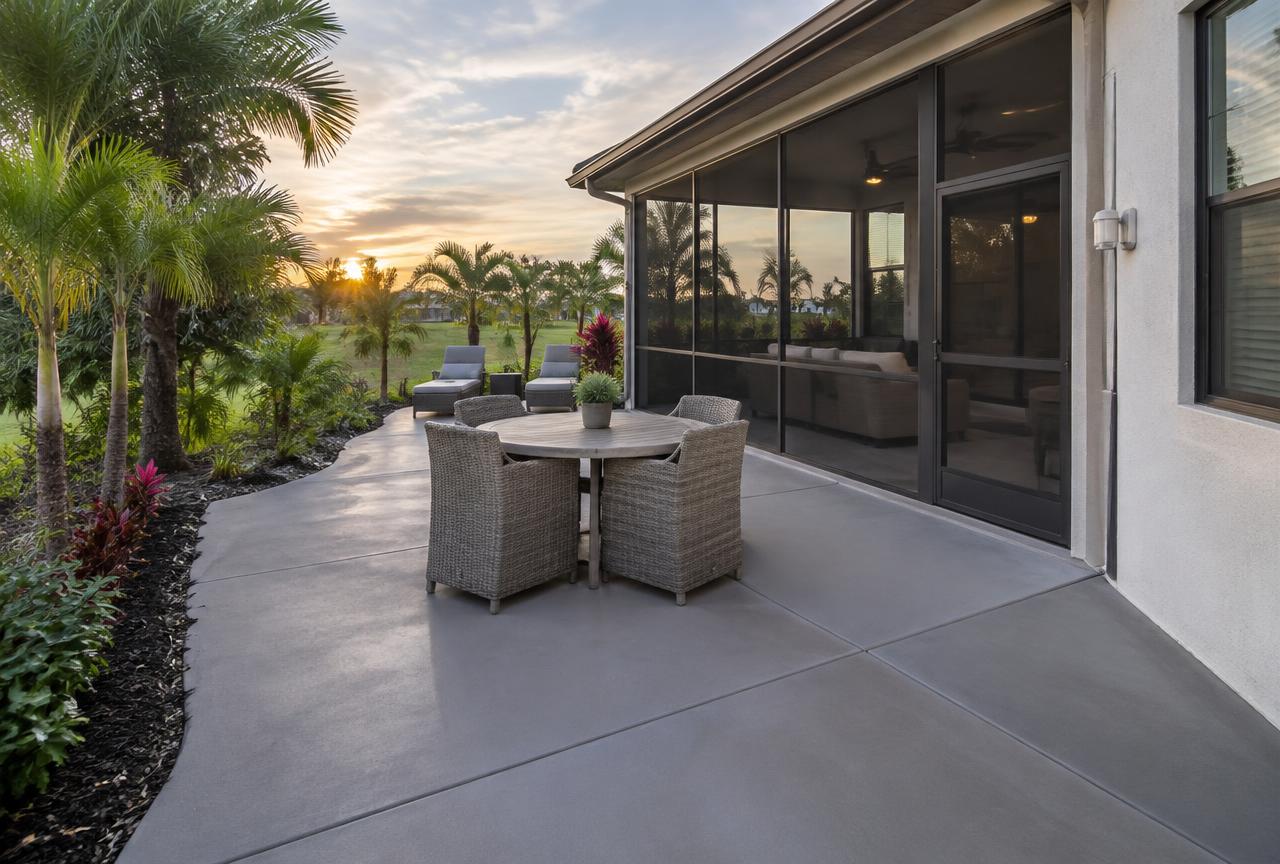
A patio is a large, impermeable surface placed right against your house. Every drop of rain that lands on it has to go somewhere, and Jacksonville delivers a lot of drops in a short time. Drainage is the single most consequential decision in a patio project, and it has to be made before the forms go in.
Slope away from the house
The patio surface needs enough fall to shed water away from the foundation, and gently enough that the slope isn't obvious and furniture still sits level. Done well, you'll never notice it. Done wrong, you'll notice every summer.
Where the water goes next
Shedding water off the patio isn't enough if the yard beyond it is flat or lower at the wrong point. We look at the whole path — patio to yard to swale to street or drain — because a new slab changes how the yard behaves.
Downspouts
A downspout discharging onto or beside a new patio concentrates a roof's worth of water in one spot. That erodes the slab edge and undermines the base. Extending or rerouting the downspout is a small job during construction and an annoying one afterward.
Low spots and birdbaths
Standing puddles after rain — "birdbaths" — come from finishing to an uneven grade. They look bad, stain, and around a screen enclosure they attract mosquitoes. The fix is careful screeding and checking the surface while the concrete is still workable, not after.
Screen enclosures
If a screen room is planned now or later, drainage changes: the roof adds runoff, and the enclosure limits where water can go. Footings and edge details also need to be built into the pour. Tell your contractor about future plans before, not after.
Common mistakes we get called to fix
- Patio poured level, so water sits or runs back toward the house.
- Slab tied flush into a door threshold with no drainage path.
- Downspout discharging directly onto the new slab edge.
- Runoff redirected onto the neighbor's side of a shared line.
- Low spots from rushed finishing.
- Patio installed over an existing yard low point without regrading it first.
What good planning looks like
We walk the yard, note where water currently runs, check downspout locations and door thresholds, set the slope target, and mark the footprint so you can see it before we form. None of that adds meaningful cost — it just has to happen in the right order.
Planning a patio? See how we build them or call 904-650-7337 for a free quote.